
Spoiler alert, this article may feel uncomfortable to finance. Nevertheless, its time to step into that…….
It’s the Tuesday before the board pack goes out.
A senior analyst, let’s call him Josh, walks over to my desk with the look of someone who’s just discovered fire.
“Watch this.”
He’s exported the monthly revenue data from the system. By product, by state, by channel. Dropped it into an AI tool and typed: “Write board commentary explaining the revenue variance to budget. Highlight the top 3 drivers.”
20 seconds later, this lands on his screen:
Revenue for September was $38.6m, $2.5m (6.1%) below budget. The shortfall was driven primarily by three factors:
- Sparkling range: $1.2m below budget, reflecting lower volumes in the 1.25L format.
- East Coast Region: $0.9m below budget, with softer performance across the independent grocery channel.
- Grocery channel: $0.8m below budget, as consumer demand moderated amid ongoing cost-of-living pressures.
These were partially offset by strong performance in the Still Water range (+$0.4m).
Clean. Confident. Board-ready formatting. Josh is beaming.
“That used to take me half a day to dig down into the data and create.”
And I’m sitting there thinking… did it, really? Why do I need you then?
Because I’ve read that commentary before. About ten thousand times. In packs I’ve reviewed, packs I’ve inherited, and, if I’m honest, a few packs I wrote myself early in my career when I thought this was what good looked like.
It’s not good. It’s not even commentary.
It’s finance slop. And now its AI slop because that’s what it thinks is good.
Before you sharpen your pitchforks let me give AI its due, because it’s earned it.
AI is bloody brilliant at what I call the left-hand side of the job. If you haven’t read my book it is part of the Finance Seesaw we all sit on and go up and down on every day.
On one side you’ve got everything that produces the numbers – transactions, reconciliations, reporting, variance tables. The data and getting it clean and in shape to be used.
On the other side you’ve got everything that uses that data – insight, decisions, presentations, influence. The commercial stuff.
Non-finance people only see value on the right-hand side. They assume the left just happens without any consideration of the time and effort it often takes finance to produce.
AI is starting to make the left-hand side just happen.
Faster and more accurately than most of us ever did. Slicing a variance through every hierarchy in your system? Ranking the top three movements? Writing it up in tidy sentences? Done before the kettle’s boiled.
That’s genuinely great. If it frees you up, use it.
But that’s The What. And at a stretch, the data version of The Why – which product, which region, which channel.
It is not the commercial reason for the variances.
And it is definitely not the So What.
And if we think this is a high standard of commentary then that is why all I read about is how wonderful AI is.
If your standards are low, anyone can exceed them
I like to think Finance is better than that. And our value only comes from that being true.

Where on the clockface are you operating?
The Clockface of insight
There’s a simple clockface I use with every finance team I work with. You work around that clockface until you get to the end. And then you may need to go around it again depending on the responses of the organisation
12 o’clock to 6 o’clock: The What and the Why.
Revenue is $2.5m below budget due to this product, region, channel. Basic finance stuff. It needs to be fast and accurate, and it’s now automated. It tells me what is going on, and why. But it’s at a very surface level.
Perfect for boards who are not part of the business and need to know what’s going on and where the touchpoints are.
Finance historically spends about half their time pulling this together – hence the 12 -6 oclock reference.
And you could do it from your desk locked in a dark cave drilling up down up down until you get your answers.
6 o’clock to 10 o’clock – The So What
Once we know the what and the why we move to the so what. What does this mean for us, what are the consequences, what could we do about it.
That bit is a little bit more nuanced. Most of the answers to those questions are not in the data. That bit needs to be done away from your desk, leaning on your network to engage in conversations and extract those answers.
Those answers and discussions bring the commercial lens to your data. What is really going on in our company, our customers and our competitors and what could we do about it.
10 o’clock to 12 o’clock – The Now What
This is where, following the discussion of so what, we move to what are we going to do about it. Who is doing what and by when
Again this is done through conversation, negotiation and influence. Finance typically doesn’t do the now what, they play the role of accountability and ensuring the now what happens as was agreed.
Back to Josh’s commentary.
Josh’s AI commentary lives before 6 o’clock. In the what and the why.
It pretends it’s in the so what. But it’s never there.
And did you notice something else while we’re here.
It’s sliced the same $2.5m variance three different ways. Some of that East Coast region variance number is Sparkling. Some of it is Grocery. The “top three drivers” overlap.
Any board member who knows what they’re looking at will spot that in about four seconds. That’s what happens when you mistake the system’s hierarchies for the business’s reasons.
So I asked Josh to walk me through what really happened in September. Not what the data said. What the business said.
He didn’t know. He hadn’t left his desk or his spreadsheets.
So we went and found out. A few phone calls and two walks across the floor. 60 minutes tops talking to the few key people I was connected into that I speak to regularly and had an inkling for the real reasons.
Sparkling 1.25L. Our co-packer’s line went down for scheduled maintenance that overran by three weeks. We were out of stock in two warehouses for most of the month. Demand was fine. We just didn’t have anything to sell.
Here’s the thing about a stock-out. It doesn’t show up as a line in your P&L. It shows up as nothing. Lost sales are invisible. AI can only describe what’s there – it can’t see the hole and connect it.
NSW independents. Two territory managers resigned in July. Their roles are still vacant because recruitment is frozen pending a restructure. Roughly 70 independent stores haven’t had a visit in eight weeks. Independents don’t reorder when nobody turns up.
And it gets better. That FTE gap shows up somewhere else in the P&L as a favourable salary variance. Ask the AI about costs and it’ll congratulate you on the saving. The same decision is costing you about $100k a week in revenue and “saving” you $6k a week in wages, and nothing in the system joins those two dots.
Grocery channel. A competitor ran a deep half-price promotion on secondary displays during a window we’d normally own. On top of that, back in May, we pulled $400k out of the autumn campaign to hit a cost target. Marketing will tell you that awareness lag is landing right about now. Sales will tell you the same thing – just not in the same room as marketing, because who cut that campaign is still a sore point between the two directors.
And the cost-of-living line?
Nobody said it. Nobody in the business. Not one person.
The AI made it up.
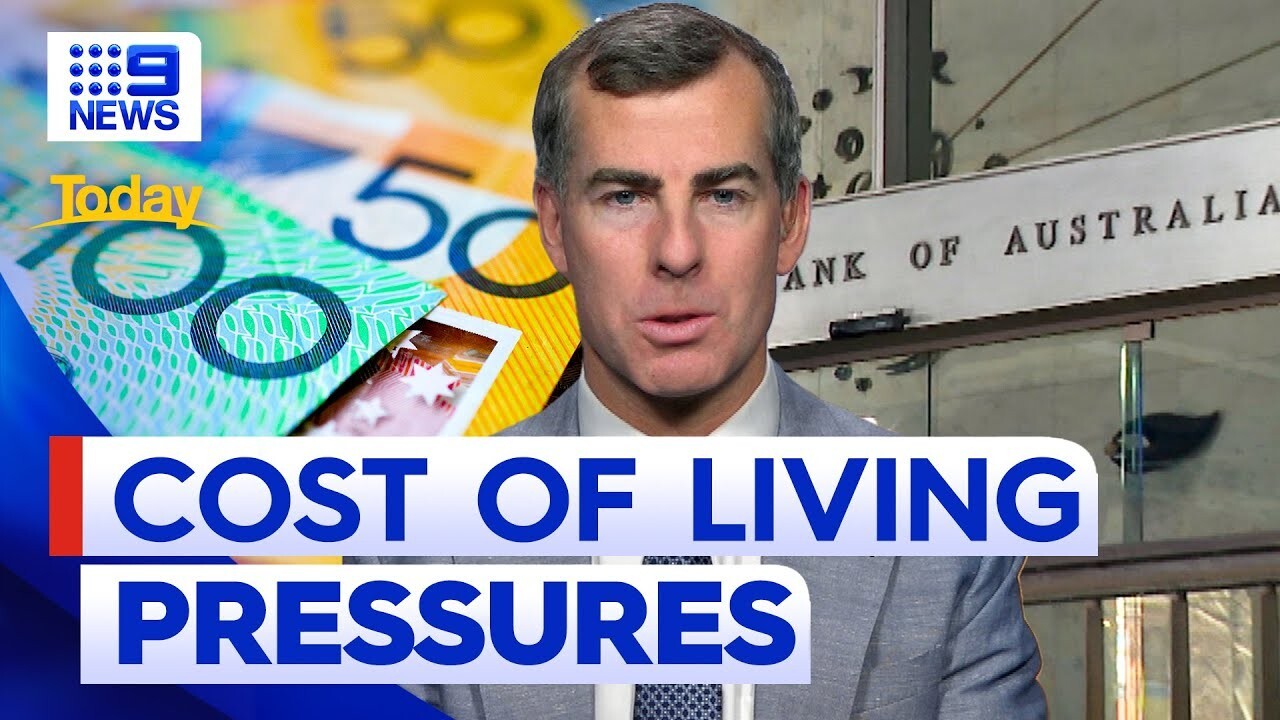
Cost of living pressures – the answer when you don’t have an answer
This is where AI becomes genuinely dangerous
When you ask AI for reasons and the reasons aren’t in the data, it doesn’t say “I don’t know.” It gives you the most plausible-sounding reason it can find.
“Consumer demand moderated amid ongoing cost-of-living pressures.”
Read that again. It sounds right. It’s the sort of thing everyone’s saying. Nobody on a board is going to challenge it. It’s completely unfalsifiable.
Twelve months of blaming the pandemic taught us that one.
And it’s of no help to anyone.
That’s why I say finances standards are low. We are dishing up finance slop. Not because the numbers are wrong. The numbers are perfectly right. It’s slop because it’s dressed up as insight, it’s delivered with total confidence, and it sends the board off to worry about the macro economy when the actual problem is a co-packer, two empty desks and a marketing budget we cut ourselves.
Think about what that does to the decisions that follow.
A board that believes it’s a consumer demand problem waits for the market to turn.
A board that knows it’s a stock-out, a vacancy and a competitor promo can do something about all three on Monday.
The moment a board member pokes at a commentary and finds nothing behind it, your credibility goes with it.
“But what if we give AI all the meeting notes?”
I hear this one a lot. Feed it every set of minutes, every email, every Teams chat. Then it’ll know.
No, it won’t.
Meeting notes record what was said. They don’t record what was meant. And what wasn’t said
The minutes will say “Sales Director agreed to the revised Q2 targets.” They won’t say she agreed with her arms crossed, said “fine” in that tone, and walked out already planning how she’ll explain the miss in March.
The philosopher Michael Polanyi had a line for this back in the 1960s in The Tacit Dimension. We know more than we can tell. Most of what makes a business tick is tacit. It lives in people’s heads, in corridors, in the five minutes after the meeting when everyone’s getting coffee. It never gets written down because nobody thinks it needs to be.
AI doesn’t know what the CEO is lying awake thinking about at 2am. (It’s the terms negotiation with that major retailer, by the way. Which changes how you’d frame the Grocery number entirely.)
It doesn’t know why the sales director and the marketing director can’t be put in the same room without someone checking their phone.
It doesn’t know that the CFO has had a tough few months on the home front and is running a little lighter than usual, so this month the pack needs to stand on its own two feet without him in the room to smooth it over.
None of that is in a dataset. All of it changes what you’d write, how you’d frame it, and what you’d put in front of that board.
You only know it if you’re close enough to the ground to hear it.
If it feels like I have hit you with a pillow case full of spanners, here’s what I really want to say, and some of you aren’t going to like it.
But it’s what non finance teams are thinking all of the time when they get this finance slop.
If AI has made your commentary noticeably better, it’s probably because your standards were low to begin with.
If the AI version looks about the same as what you used to write, that tells you exactly what you were contributing. You were the machine. You were spending half a day doing what a tool now does in 20 seconds.
And now the tool doesn’t need you.
That’s not a threat. It’s just maths. If your output is the what and the why, and that’s now free, then your job is a cost line looking for a reason to exist.
So you’ve got one choice.
Option one: take what the AI produces, tidy the formatting, hand it in, and wait.
Sooner or later someone senior is going to notice they’re paying a finance business partner to forward an AI’s homework. That’s not a career. That’s a countdown to redundancy.
Option two: take what the AI produces as your starting point, and go and do the job you were actually hired for. The one the business has been quietly waiting for. The one a lot of finance people have been getting away without doing for years, because nobody knew what good looked like either.
Well. They’re about to.
What the step up actually looks like
Here’s what Josh’s commentary looked like by Thursday:
Revenue was $2.5m (6.1%) below budget in September. Around $2m of this is controllable and recoverable.
Supply: A three-week co-packer outage left Sparkling 1.25L out of stock in two major retailers (~$1.2m). The line is back and stock is landing this week. We expect to recover most of the volume in October, though some shoppers will have switched brand during the gap.
Coverage: Two NSW territory roles have been vacant since July under the recruitment freeze. ~70 independent stores have not been visited in eight weeks (~$0.9m). Each week of vacancy is costing ~$100k in revenue against ~$6k in salary.
Discussion required on how to address the resourcing/sales/cost balance
Competition and investment: A competitor half-price promotion took our secondary display slot, compounded by the lag from the $400k autumn campaign reduction in May (~$0.8m combined). We expect the competitor to repeat this in the summer peak.
Discussion required on whether to reinstate campaign spend ahead of summer, or other plans to mitigate competitor response.
You will notice finance doesn’t need the answers or the recommendations. In fact they will be debated if you do. It just needs to create the container for the discussion to happen around what we could do next.
Same numbers. Same variance. Completely different conversation in the meetings.
The first version gets a nod and a “noted.”
The second version gets exploratory discussion happening and a board that trusts its finance team a little bit more than it did last month.
That’s the gap. And no amount of prompt engineering closes it, because the information that closes it isn’t in the system.
So what can we do about this – starting this week
1. Let AI do the what and the why. Then get out of your chair.
Seriously, use it. Let it build the variance table and the first-draft summary.
Then take every hour it’s saved you and spend it on the floor. Toyota’s Taiichi Ohno called this genchi genbutsu – go and see. Go to the sales meeting. Ring the supply chain manager. Sit with marketing for an hour. If you’re not doing at least one day a month out with the business, start there. Aim for one a week.
2. Treat every AI “reason” as a rumour until a human confirms it.
For every driver the AI gives you, ask one question: who told me this? If the answer is “nobody, the data suggested it,” it’s a hypothesis, not a reason. Go and test it. If you can’t put a name next to a reason, it doesn’t go in the pack.
3. Write your commentary before month end.
The best FBPs I know have their commentary 80% written before the books close. Not because they’re psychic, but because they’ve been having the conversations all month. They knew about the co-packer in week one. They knew about the vacancies in July. Month end just confirms the numbers. If your commentary only starts when the data lands, you’re already too late.
4. Finish every section with the So What.
For every major movement, run it through the 3 C’s: what does it mean for the Company, how will Customers respond, and what are Competitors likely to do next? Then end with a discussion point. “Noted” is not an outcome. If a section of your commentary doesn’t tell the board the options we are considering, ask yourself why it’s in there.
5. Write for what’s keeping the CEO up at night.
Before you finalise the pack, ask yourself: what is the person reading this most worried about right now? If you don’t know, that’s your first conversation of the week. Commentary that connects the numbers to the thing they’re already lying awake about gets read twice. Commentary that doesn’t gets skimmed on the way to the next agenda item.

You are wrong, Andrew
And now its your turn to prove me wrong
I know some of you are already typing.
“You haven’t seen what the latest models can do.”
“We’ve integrated it with our CRM.”
“Agentic workflows will solve this.”
Maybe. I’m genuinely open to it. I am just yet to see it.
So here’s my challenge.
Show me an AI-generated board commentary that knew about the stock-out before the sales team told you. That knew the vacancy was costing more than it was saving. That knew which two directors weren’t speaking and framed the recommendation so both of them would back it.
Show me something it produced in the time it took me to get a coffee that a great finance business partner couldn’t beat with a phone call and a walk down the corridor.
I’ll wait. Flat white, no sugar.
And while I’m waiting, go and have a conversation with someone outside finance. You’ll learn more in ten minutes than your AI will in a month.
And if you are still worried remember
Once the robots arrive, the only thing left will be Business Partnering.
If you need help just ask.